
“A single transaction can involve a firm in Los Angeles, another in London, another in Paris, and another in São Paulo”
Interview
LWYR, Thursday, October 15, 2026
By Cristián Vial Le Beuffe, Partner at Vial Gallardo Abogados
By: LWYR Team.
For Cristián Vial, partner at Vial Gallardo Abogados and one of the most recognized voices in aviation law in Chile, the success of an aircraft financing or leasing transaction comes down to the details: meeting deadlines, reading a highly technical contract closely, and the relationship of trust built over the years with clients, authorities, and foreign law firms.
A lawyer from the Pontificia Universidad Católica de Chile and holder of an LL.M. in International Legal Business Systems from the University of Exeter, United Kingdom, Vial has built, over more than two decades, a practice that today advises aircraft leasing companies, banks, export credit agencies, and airlines on transactions spanning multiple jurisdictions at once.
In this interview, he traces how he came to specialize in this particular area of law, and shares that one of the things he enjoys most is working simultaneously with law firms in different countries.
— Tell us how you came to specialize in aviation law. What were those early years like?
— My connection to this very specific area began when I was working at Vial & Palma Abogados. The firm had a client called Antarctik, whose principals were Jorge Castillo and Daniel Silberman. In conversations with the firm’s senior partner, Manuel José Vial, the idea emerged to train one of the firm’s lawyers in aircraft leasing and financing — someone who would study in depth all the legal framework governing this type of contract. I was chosen, and from then on I took private tutoring sessions with them, who gave me the tools to understand contracts that are quite difficult to approach given their length, their technicality, and their complexity. Over the years I have come to master, more and more, not only the legal aspects but also other factors — outside the contract itself — that often turn out to be more decisive than strict compliance with the law.
I particularly remember spending two weeks in Rockford, a town near Chicago, advising a company called Residco on the delivery under lease of an aircraft to Lloyd Aéreo Boliviano. There I experienced the whole process firsthand: the arrival of the technical team, the American counterparty, the review of the data room with all the information, the concept of traceability, the difference between the airframe and the engines, and how legislation varies from one country to another. It was a real education.
— Before specializing in aviation, you worked in commercial and banking law, at firms such as Claro & Cía and Vial & Palma, and as a partner at Palma Abogados. How did that background shape the way you structure aviation transactions today?
— I think having a background in commercial law and banking law gave me an important advantage, because it gave me the judgment to understand what lies behind this very specific area of law. At the same time, having worked on international transactions — syndicated loans, M&A deals with foreign companies — allowed me to understand how foreign law firms operate, whether in the United States, the United Kingdom, or elsewhere in Europe. That is fundamental. The standards demanded by international legal practice are, in my view, extremely high: they require very fast response capabilities, where the margin for error is nearly zero. That training, built up over all these years, is what has allowed me to meet the needs of very different clients, from aircraft leasing companies to airlines.
— What do you think has led clients and foreign law firms to keep coming back to you and the firm, year after year?
— That’s a difficult question, because trying to explain why clients come back to you rather than to someone else borders on self-congratulation, and I’d rather stay humble about it. But I think what has allowed us to build client relationships that have lasted over time — and to receive instructions from major foreign law firms — has to do with what I mentioned earlier: we have always delivered work that responds within the required timeframes, with precision and attention to the smallest detail, which is ultimately what makes a transaction of this kind succeed or fail. And, finally, we have taken great care of our relationship with the Chilean authorities, particularly with the administrative staff of the National Aircraft Registry [Registro Nacional de Aeronaves]. That relationship, built over the years, also makes the difference.
— A large part of these transactions involves coordinating Chilean law with foreign firms and clients who are unfamiliar with it. How do you bridge that gap?
— Firms that specialize in these matters tend to approach it in a very pedagogical way, helping the counterparty gradually understand how each country’s legislation works. This is usually channeled through a legal questionnaire that they send over, so that the firm — generally based in common-law, Anglo-Saxon jurisdictions — gains a clear understanding of how the system works in Chile: whether it operates through a single registry or through registries governed by other types of conventions. What matters is not simply answering the questionnaire, but making sure they understand how each country’s registration system works, so that the aircraft is properly registered under the correct nationality mark, and so that the rights of the owner and the lessor have legal certainty. If there are security interests involved — such as aircraft mortgages or restrictions over the contracts — they need the assurance that those rights will be respected down the road, whether in the event of a dispute or a need to repossess the aircraft, and that this can be resolved within a short timeframe.
— What has been the most complex transaction you have led?
— The most complex one was a recent transaction in which we were involved in handling 34 aircraft and their respective contracts, with closings taking place simultaneously in Chile, Peru, Colombia, and Brazil. I believe it has been the most complex transaction I have handled, not only because of the number of aircraft, but because of the multiplicity of parties that had to be coordinated and understood at the same time.
— With the rise of low-cost airlines in the region, has the type of aircraft requirements you receive changed?
— Whether an airline is low-cost or a traditional carrier doesn’t really affect aircraft requirements, either now or in the future, regardless of global market conditions. Demand for aircraft is a constant, and I think that demand has become increasingly democratized: it makes no difference whether it’s a low-cost or a traditional airline — the aircraft is the same. What changes is the interior configuration, not the airframe or the engines. So, beyond the type of business each airline runs, they will always require an aircraft with certain characteristics — range, capacity, depending on the type of operation — and that has nothing to do with whether it’s low-cost or not.
— Beyond the technical side, what do you enjoy most about this work?
— What I enjoy most is the chance to work simultaneously with law firms in different countries: a single transaction can involve a firm in Los Angeles, another in London, another in Paris, and another in São Paulo. It’s also enjoyable to interact with each airline’s in-house legal department, adapting to their ways of working, which can sometimes be simpler and sometimes less so — but always understanding that success lies in the client receiving the aircraft on the negotiated terms, and in the counterparty feeling that its rights will be sufficiently protected.
— What advice would you give a young lawyer who wants to specialize in this industry?
— The first and most fundamental thing is to have a very advanced command of English, at a proficiency level. Having experience, as I did, in drafting and reviewing cross-border contracts — whether M&A or finance agreements — also provides an important foundation for understanding much of what is dealt with in this type of contract. And there is a factor that always helps, which I won’t deny: luck. I was lucky that the owners of a company saw certain abilities in me, and that the firm’s senior partner at the time, Manuel José Vial, trusted me to train in this area.
Quick questions
— Lawyers who have influenced you:
— José María Eyzaguirre Baeza, Cristián Eyzaguirre Smart, and Manuel José Vial. It’s hard to admire just one.
— A professor who left a mark on you:
— Víctor Vial del Río.
— A world leader you would invite to lunch:
— Barack Obama.
— What you like most about the profession:
— The adrenaline that comes from transactions demanding your very best in the shortest possible time.
— What you like least:
— On the whole, everything is handled well. After all these years, I don’t think I could point to anything I dislike — otherwise, I would have chosen a different specialty.
Aircraft financing or leasing, or a corporate matter? Contact Cristián Vial:
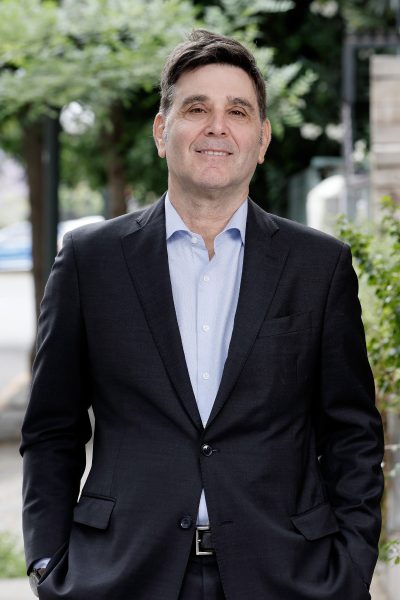
Cristián Vial Le Beuffe
Partner - cristian.vial@vgcycia.cl
Share this post:
RELATED POSTS: